Creativity, Subjectivity, Relocation
15-16 April 2025

Funded by


The Symposium is taking place at the Sir Duncan Rice Library. To access the meeting rooms, ask the library information desk for a library visitors’ access card which you should hand over at the end of the day please.
Please take the lift to the Seventh Floor and turn left towards the Meeting room 3.
The performance is taking place at the Elphinstone Hall in the afternoon.
for details of the venues, please look at the bottom of this webpage.
Tuesday 15th
At Sir Duncan Rice’s Library, 7th Floor, Meeting Room 1
[09:30-10:45] Welcome & Keynote Speech #1: Professor Norbert Meyn
[10:45-11:15] Break
[11:15-13:00] Papers Discussion Panel #1
[13:00-14:00] Lunch
[14:00-15:30] Roundtable Panel Discussion
[15:30-16:00] Break
At Elphinstone Hall
[16:30-18:30] Performance #1: Carnamortal (the Flesh In-Between)
Wednesday 16th
At Sir Duncan Rice’s Library, 7th Floor, Meeting Room 3
[09:30-11:45] Documentary Scotland Premier: Music of our Neighbours
[11:45-12:15] Break
[12:15-13:00] Keynote Speech #2: Professor Nazli Tabatabai-Khatambakhsh
[13:00-14:00] Lunch
[14:00-15:45] Papers Discussion Panel #2
[15:45-16:15] Break
At Elphinstone Hall
[16:45-18:30] Performance #2: Luceafărul (The Legend of the Evening Star)
Greetings Everyone. I am Dr Amin Hashemi from The School of Language, Literature, Music and Visual Culture (LLMVC) at the University of Aberdeen. I am delighted to welcome you to the symposium Creativity, Subjectivity, Relocation, an interdisciplinary event exploring the interplay between creative expressions, identity formation, and the dynamics of social and environmental space artists move into/from, live and work in. This symposium takes the format of an un-conference, embracing diverse perspectives from across the humanities, social sciences, and performing arts, offering a unique platform for scholars and practitioners to investigate and debate the complexities of cultural encounters and creative expression.
We are more than happy to announce two great musician academic keynote speakers from London, Professor Norbert Meyn from Royal College of Music and Professor Nazli Tabatabai-Khatambakhsh from Guildhall School of Music & Drama, as well as welcoming Professor Juniper Hill from the University of Würzburg premiering her Documentary in Scotland.
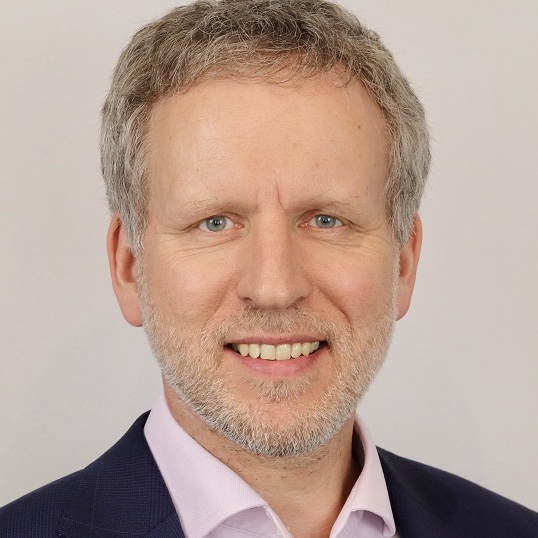
Norbert is a UK-based musician and researcher originally from Weimar, Germany. He has had a distinguished career as a singer; the director of Ensemble Émigré, a vocal and language coach for leading choirs, opera houses, and recording labels across Europe, performing globally with ensembles and working with renowned conductors and opera companies. Between 2019 and 2023, he led the AHRC-funded Music Migration & Mobility project, exploring historical and contemporary themes of migration in music. His latest publication is on a framework foregrounding mobility rather than belonging for engaging with music shaped by transnational migration.
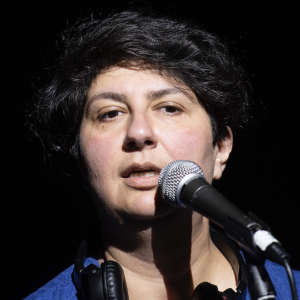
Nazli is s Professor of Dramatic Writing and Associate Artist at the Guildhall School of Music & Drama, as well as holding key roles at Sanctuary Queer Arts and the Oxford School of Drama. Born in Tabriz, Iran, and raised in Edinburgh, she has an extensive career spanning opera, theatre, dance, and circus. She was the founder and artistic director of ZENDEH, a former Arts Council England National Portfolio Organisation. An Arts Council England fellow and governance committee member of the International Society for the Performing Arts, she integrates performance, policy, and strategy within the arts.
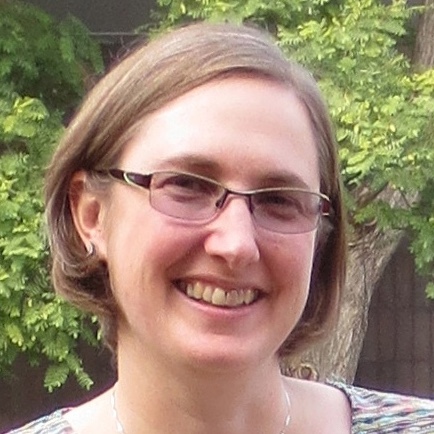
A key feature of the symposium will be the Scotland premiere of the documentary The Music of Our Neighbours by Professor Juniper Hill (University of Würzburg). This film explores the rich musical traditions of diverse cultural communities and their interactions in Würzburg, Germany, offering thought-provoking insights into musical diversity, cultural exchange, and the fostering of harmonious coexistence. Professor Hill’s work exemplifies the interdisciplinary spirit of this symposium.
The symposium also includes performance sessions, and opportunities for composition Q & A with participating artists. These musicians, who contributed to Dr Hashemi’s research, represent a unique mix of academic discussions and artistic performances, showcasing the potential of creative integration. We are honoured to host composers Ashkan Layegh from London and Dr Hossein Hadisi from Southampton.

Ashkan Layegh is an Iranian composer/improviser/multi-instrumentalist and visual artist concerned with self-reflexive structures. His music has been performed by his own ensembles, including the Phemo Quartet, at such venues as Kings Place, Southbank Centre and Wigmore Hall as well as by the Amsterdam Sinfonietta and Septura Brass, Chroma Ensemble, Temporal Harmonies Inc and an upcoming project with London Sinfonietta. Ashkan has trained as a traditional Persian setar player and improviser since an early age— heavily influencing his syntactical-compositional mindset— and has appeared as Electric Guitarist and Alto Saxophonist on stage with his own ensembles. He also studied architecture for two years, which promoted his interest in a wide range of arts, including cinema, painting and sculpture. He is currently studying for a Doctorate degree in composition at the Royal Academy of Music, where he gained his Master’s degree as composer (DipRAM) and Bachelor’s degree as a pianist (1st Class Honours)— the first Iranian to do so since the 1979 Revolution.
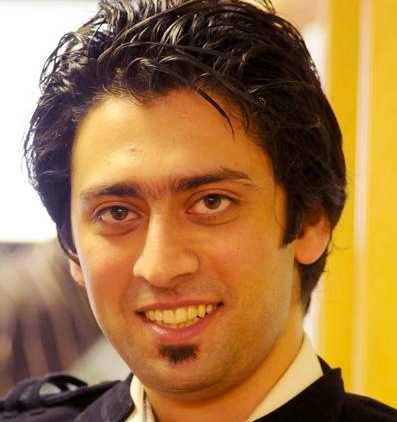
Hossein Hadisi is a composer and ethnomusicologist working on improvisational models in Persian and Middle Eastern musical and theatrical traditions. Hossein studied his PhD in Composition with Professor Michael Finnissy at the University of Southampton, where his work on the Rubáiyát of Omar Khayyám led to composing “Wine of the Mystic”. His research project at Cambridge started with a study of the history and current trends in Persian storytelling art of Naqqàli. The result of this research was the stage-work based on the ancient Persian Book of Kings, Firdausi’s Shahnama: “Zahhák: Dragon King of Persia” (produced in collaboration with Cambridge Shahnama Centre, British Academy’s British Institute for Persian Studies, Iran Heritage Foundation and the 4th UK Iranian Film Festival and supported by the Cultural Engagement Fund of the Arts and Humanities Research Council). Hossein is also the founder of Maqam Encyclopaedia (2011-2018, Darwin College, Cambridge), an online encyclopaedia of Persian and Middle Eastern modes. Maqám Encyclopaedia compares different renditions of each Maqám by displaying the recordings, scores and scholarly text available. It also creates a multi-dimensional family-tree of Maqáms and enables comparison by interval, geographic distribution, language and country.
Programme
Tuesday 15th
- [09:30-10:45] Welcome & Keynote Speech #1: Professor Norbert Meyn
Title: Foregrounding Mobility rather than Belonging – Navigating Identity and Authenticity in Music by Transnational Migrants
Abstract: This paper will introduce key principles of a conceptual framework for engaging with music shaped by transnational migration, developed during the recent AHRC project ‘Music, Migration and Mobility – The Legacy of Migrant Musicians from Nazi Europe in Britain’ at the Royal College of Music through interdisciplinary work that connected musical practice and historical musicology with human geography and mobility studies. The paper will also discuss the project’s creation of story maps, oral history interviews, recordings and sheet music editions, all of which were made available through the online resource ‘Music, Migration and Mobility’ on the RCM website (www.rcm.ac.uk/singingasong). Musical examples will include the bilingual revue ‘What a Life!’ written by WW2 refugees during internment on the Isle of Man in 1940 and art songs in English written by composers who moved to Britain from Germany, Austria and Hungary. - [10:45-11:15] Break
- [11:15-13:00] Papers Discussion Panel #1 [link to abstracts]
1. Dr Camille Germanos Al-Hasan, PhD Goldsmith London
2. Sofia Kondylia, PhD Candidate University of Bermingham
3. Dr Federica Nardella, PhD King’s College London
4. Dr Lola Salem, University of Oxford - [13:00-14:00] Lunch
- [14:00-15:30] Roundtable Panel Discussion
Panel Members: Dr Camille Germanos Al Hasan, Dr Amin Hashemi, Professor Nadia Kiwan, Dr Nicolas Le Bigre, Dr Matthew Machin-Autenrieth, Professor Norbert Meyn and Professor Nazli Tabatabai-Khatambakhsh.
Themes: Belonging & home; Music, political Community & Identity; Creativity & Subjectivity; Definitions & Interdisciplinary Perspectives; Racism, Xenophobia & Othering; Creativity & Integration; Oral Histories & Psychoanalytic Dimensions; Collaboration, Dramaturgy and Equitable Practices. - [15:30-16:00] Break
- [16:30-18:30] Performance #1: Carnamortal or; the Flesh In-Between
Abstract: A collaborative multi-media production, this performance aims to represent syntactical duplexity in manipulating image and sound through time and space; not as momentary synchronisations — to visualise sound or musicalise image– but as a doppelgänger audio/visual experience. As the title suggests, the project focuses on the notions of viscerality; the collective experience of having a body—as an undeniable truth between birth and death— and the corporeal representation of body as a physical substance, in sound-making and moving image.
Band Details:
Sam Norris – Alto Saxophone
Harry Ling – Drums
Luke Brueck Seeley – Drums
Ashkan Layegh – Electric Guitar, Composition and Direction
Director of Photography: Harvey Cull’s
Illustrations: Amirhossein Asadi
Wednesday 16th
- [09:30-11:45] Documentary Scotland Premier: Music of our Neighbours
(documentary run time is 1 hour and 25 minutes)
by Professor Juniper Hill & Dr. Cornelia Günauer
Abstract: In this Applied Ethnomusicology project, we aim to educate about diverse cultural expressions in provincial Germany, to counter stereotypes about post-migrant cultures, and to assist under-acknowledged artists in networking, transmitting their heritage, and sharing their stories and creativity. The documentary film The Music of Our Neighbours features six portraits of artists who make their lives in and around Würzburg, a conservative-leaning provincial city known for its wine festivals and local Franconian identity. […] Their combined experiences provide insights into the intercultural struggles, joys, and creative pathways that characterise the increasing diversity of provincial Europe today. - [11:45-12:15] Break
- [12:15-13:00] Keynote Speech #2: Professor Nazli Tabatabai-Khatambakhsh
Abstract: Consider migration through a cultural lens by thinking Iranian and speaking in a Scots accent using English, and consider this all through the lens of the French opera Carmen, set in a remote frontier town in Seville, Spain, what is revealed between breaths? - [14:00-15:45] Papers Discussion Panel #2 [link to abstracts]
1. Mehdi Bagheri, PhD Candidate University of Würzburg
2. Collaborative presentation by Dr Elizabeth Haddon, Dr Federico Pendenza, Dr Marianna Cortesi, Bethan Kelly and Laura Sutcliffe; University of York
3. Morag Johnston, PhD Candidate University of Aberdeen
4. Boris Wong, PhD Candidate SOAS University of London
[1:45-16:15] Break - [16:45-18:30] Performance #2: Luceafărul (The Legend of the Evening Star)
Abstract: A modern Romanian mythological, philosophical and lyrical poem by the most influential romantic Romanian poet, Mihai Eminescu. Sung in Romanian by Lavinia Marin and Miriam Badea, with English subtitles and recitations of this text by Adrian Sahlean who received Eminescu Grand Prize 2016 for his translation. Set to music by Hossein Hadisi.
Artists:
Hossein Hadisi: Piano and Viola
Lavinia Marin: Story Teller Soprano Vocals
Miriam Baden: Story Teller Vocals
Adrian George Sahlean: translator
The Symposium Venues
The University of Aberdeen, founded in 1495, stands as one of Scotland’s oldest universities and a leader in European higher education. With over five centuries of scholarly heritage, it has produced significant advancements across fields, particularly in medicine, science, and the humanities. The university’s historic campus is renowned for its medieval architecture, including the iconic King’s College Chapel, symbolising its longstanding commitment to knowledge and innovation. Emphasising interdisciplinary research, Aberdeen addresses global issues like energy sustainability and health, making it a vital institution both locally and internationally.
For more, visit University of Aberdeen.
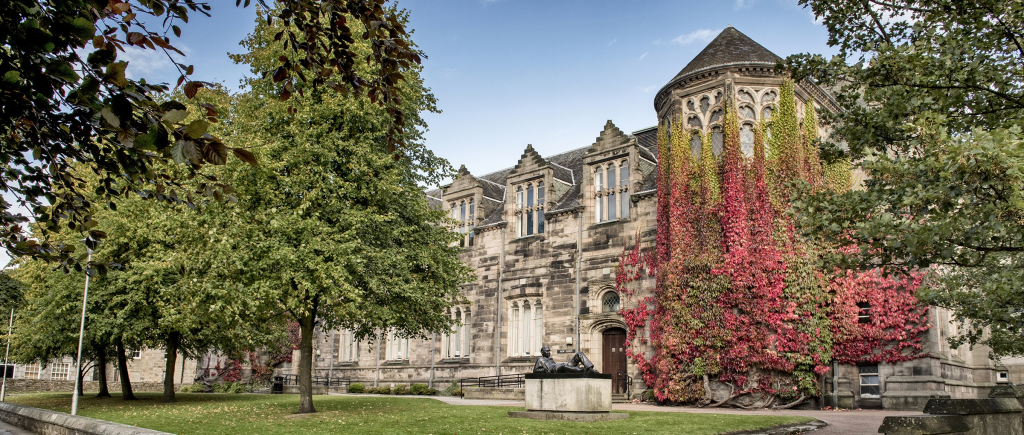
Inside the main old campus of the university and by the east of the Elphinstone Lawn, the Elphinstone Hall hosting performances while the rest takes place at the Sir Duncan Rice Library. The venues are apart from each other about 10 to 20 minutes walk inside the Old Aberdeen campus.
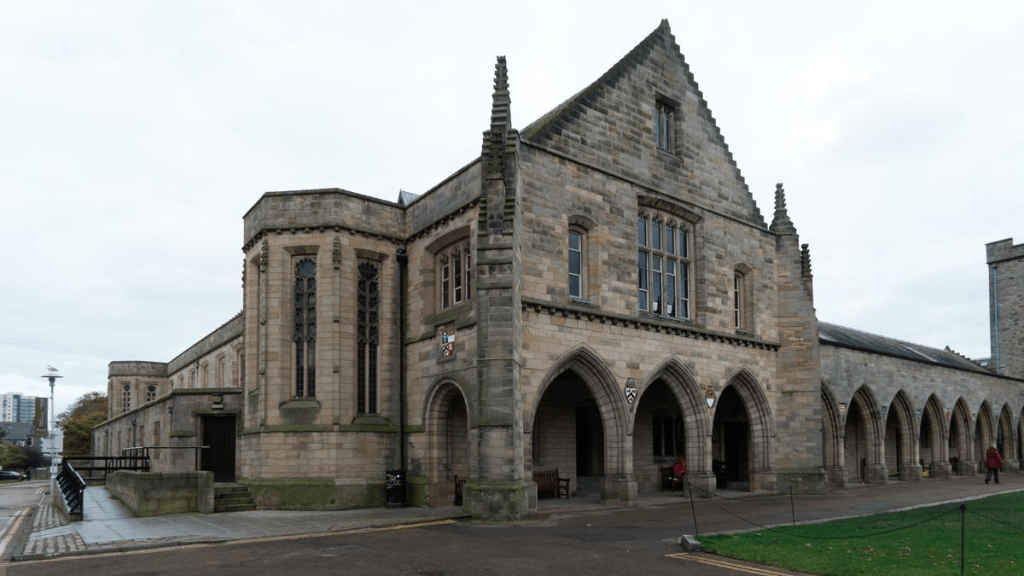
Elphinstone Hall is a prominent historic building at the University of Aberdeen, named after the university’s founder, Bishop William Elphinstone. Completed in 1931, it serves as a versatile venue for events, graduations, and formal gatherings. Its grand Gothic architecture, detailed woodwork, and stained-glass windows create a space that reflects Aberdeen’s legacy of academic tradition. Often used for significant university ceremonies, Elphinstone Hall embodies the university’s enduring heritage and is central to its cultural and communal activities.

The Sir Duncan Rice Library is the main academic library for the University of Aberdeen in Scotland. Designed by Schmidt Hammer Lassen Architects and completed in 2011, this iconic building is a prominent landmark on the campus. It houses a vast collection of books, journals, and digital resources, supporting teaching, learning, and research across all disciplines. The library also features modern study spaces, group work areas, and state-of-the-art technology, providing students and researchers with a dynamic and inspiring environment for academic pursuits.
To walk from the library to the hall for performances in the afternoon, you can use the gadget below:
Transport
A quick guide using public transport getting in and around the campus is to use First Bus services.
To attend the symposium from Aberdeen, service number 19 stops near the Sir Duncan Rice’s Library, where all the keynotes, presentations, panel and documentary is taking place. The stop you should get off at looks like this:
Serve number 20 also runs in the middle of the campus which gives you access to both Elphinstine Hall and Library within the range of 10 to 15 minutes walk. The stop you should get off at looks like this:
Services number 1 and 2 run through the King Street on the Eastern end of the campus. If you pop out in front of the main gate of the University of Aberdeen right after the University’s playing fields, then there is less than 5 minutes of walk to the performance venue at the Elphinstone Hall. The stop you should get off at looks like this:
If you are flying, you can take the other bus company’s services, StageCoach service number 727, which could around 45 minutes. Alternatively, Taxis are also available from the airport.
If you are taking the train, you would walk out into the Union Square in Aberdeen city centre, where Bus services 1, 2, 19 and 20 do NOT stop at. please keep in mind that Union Square is not at the Union Street, but at the Guild Street. You can take any FirstBus service from the Union Square that takes you onto the Union Street and then switch to any of the services 1, 2, 19 or 20 to come to the University of Aberdeen.
The postcode for the Sir Duncan Rice Library is AB24 3AA
The postcode for the Elphinstone Hall is AB24 3EE
The postcode for the Main Gates is AB24 5SQ
Food
The symposium offers food and drink to attendees but there is also a cafeteria on the ground floor of the library if you like alternative options.
If people would like to gather together after the symposium, I can suggest a few places. There is The Bobbin pub very close to the university (500 King St, Aberdeen AB24 5ST) offering a casual, cosy and friendly environment and is open till late. In the city centre, you have many options on the Belmont Street and in front of Marischal College in Broad Street. If you fancy a pub in city centre, I can suggest the BrewDog in Castlegate (5-9 Union St, Aberdeen AB11 5BU).
 Dr. Amin Hashemi